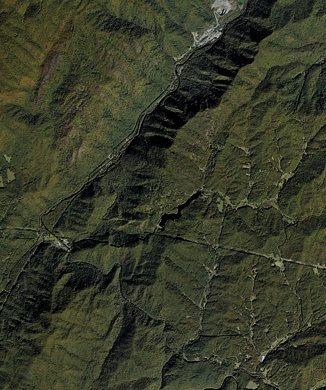
Queens Falls
By Armen Suny · Last verified Sep 2026
LiDAR & 3D terrain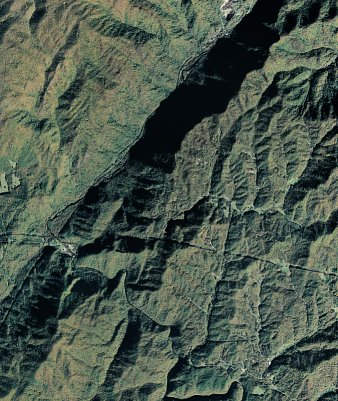
Photo Credits (2)
Difficulty
Moderate
Trail Length
2.5 miles
Trail Type
Out And Back
Elevation Gain
300 ft
About Queens Falls
Queens Falls sits tucked into the lush pines and hardwoods of Pisgah National Forest, offering a peaceful cascade that’s perfect for a half-day outing. The falls are framed by mossy rock and mature forest, making it a favorite stop for hikers and photographers looking for a serene woodland scene without a long commitment. The route to the base follows a roughly 2.5-mile out-and-back trail with about 300 feet of elevation gain, so plan on moderate exertion and plenty of photo opportunities along the way. Managed by the U.S. Forest Service as part of Pisgah National Forest, the approach wanders through shaded singletrack and rockier tread where the forest opens to reveal the falls. The trail is well-marked, but surfaces can be muddy and slippery after rain—sturdy shoes and caution on wet rock are recommended. If you’re after an accessible waterfall experience in western North Carolina, Queens Falls delivers a quiet, scenic reward for a moderate hike.
The Setting
Queens Falls sits at 2,959 feet along the Nantahala River, in the hills of North Carolina.
Trail & Hike Details
The Approach
The moderate 2.5-mile out-and-back trail gains 300 feet of elevation on the way to the falls.
Trail Description
Out-and-back, 2.5 miles total with approximately 300 feet of elevation gain; rated moderate. The trail is primarily natural forest tread with sections of rocky footing and gentle-to-moderate inclines. It is generally well-marked, but expect muddy or slick spots after rain and use caution on wet rock near the falls. Suitable for day hikers; no technical climbing required.
What to Expect
Dogs are welcome.
Accessibility
The trail is not wheelchair accessible. Uneven terrain and elevation changes require steady footing.
Frequently Asked Questions
🐶 Are Dogs Allowed at Queens Falls?
✅ Dogs are allowed
Are There Any Fees or Permits Required?
🆖 No fees required
🏊 Is There Swimming at Queens Falls?
❌ Swimming is not allowed
When to Visit
Spring and early summer are ideal for visiting Queens Falls, as the water flow is typically strongest during these seasons. Fall offers stunning foliage, while summer provides lush greenery.
Seasonal Access
The best time to visit is Spring, Summer, and Fall. Winter access may be limited.
Safety Information
The trail can be slippery, especially after rain. Watch your footing and stay on marked paths. Cell service may be limited, so inform someone of your plans before heading out.
Current Water Conditions
74 ft³/s
Current discharge — how much water is flowing
Much lower than usual for this time of year
Based on 21 years of record
1.26 ft
Water depth at gauge
7-Day Discharge Trend
What does this mean for your visit?
Flow is well below normal for this time of year, so the waterfall may be a trickle.
About This Gauge
7-Day Flow Outlook
Based on the USGS gauge NANTAHALA RIVER NEAR HEWITT, NC (3 km away).
Today
Moderate
75 cfs
4/10Tomorrow
Moderate
76 cfs
5/10Thu
Moderate
93 cfs
5/10Fri
Moderate
84 cfs
5/10Sat
Low
86 cfs
6/10Sun
Low
99 cfs
6/10Mon
Low
90 cfs
6/10Best window: Sat — low flow, sunny (trip score 6/10).
Best time of year: this gauge typically runs highest from mid January to late January, peaking in December.
How we calculate this
This is a transparent outlook, not a precise forecast. We take the waterfall's current flow strength (how it ranks against its historical normal for today, from the nearest USGS stream gauge), carry that ranking forward along the gauge's seasonal curve, and nudge it for forecast rain. Confidence is highest for the next day or two and falls further out. Always check official conditions and your own judgment before visiting — high flows can be dangerous.
Know when to go.
Get a free email alert when waterfalls near Robbinsville hit peak flow. We only send when conditions are worth the trip — no weekly newsletters, no spam.
Weather Forecast
The Terrain, Seen by LiDAR
Aircraft-mounted lasers measured this ground to within inches. Trees and buildings are digitally stripped away, leaving the bare shape of the land the water has carved.
The ground through the falls loses about 192 feet in steep steps rather than one leap. The ground at the falls is roughly 2,949 feet above sea level.
The whole reach is steep: about 131 feet of descent in the 500 feet above the falls and another 89 feet in the 500 feet below. The falls face west and glow in afternoon and evening light.
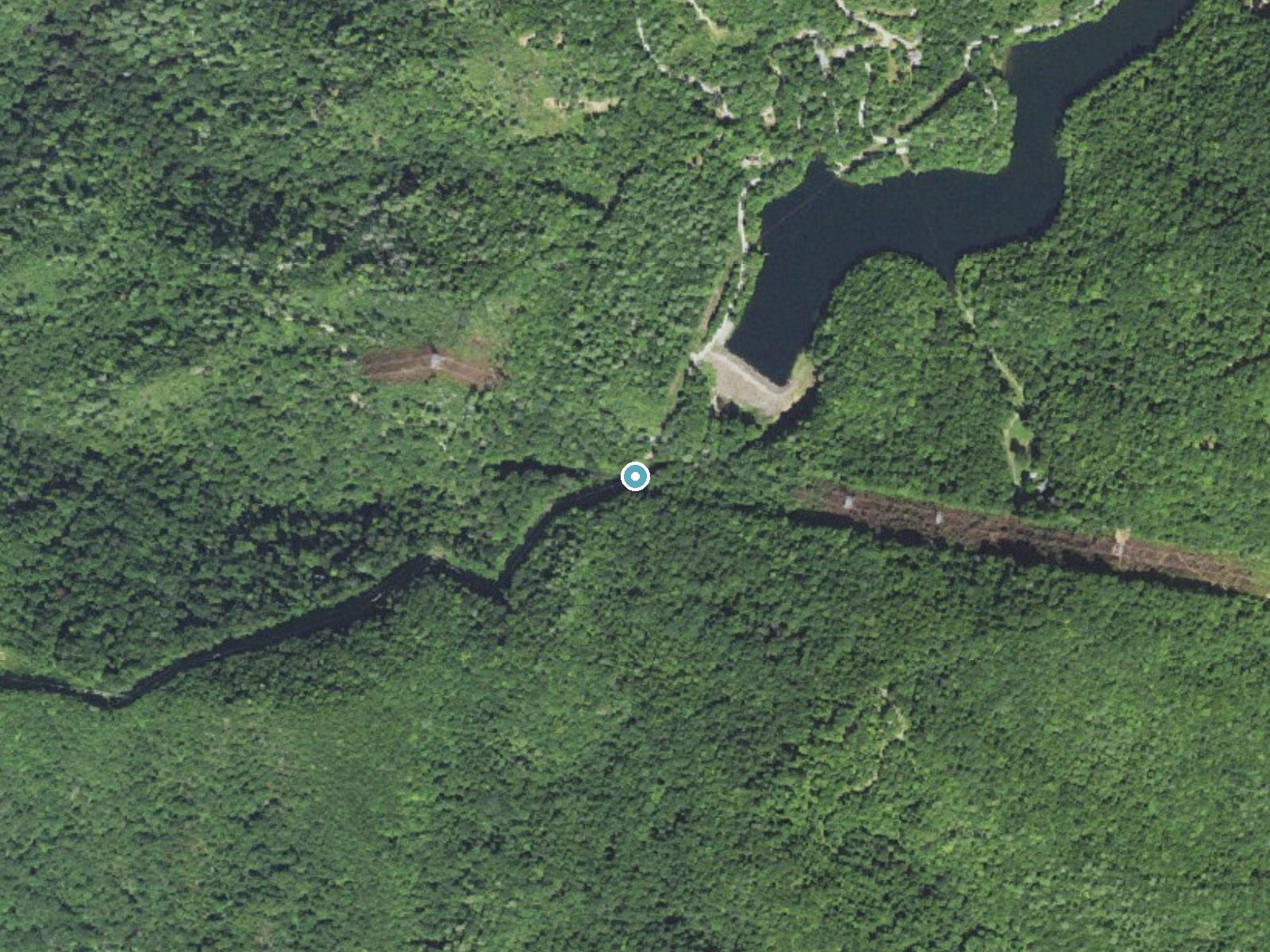
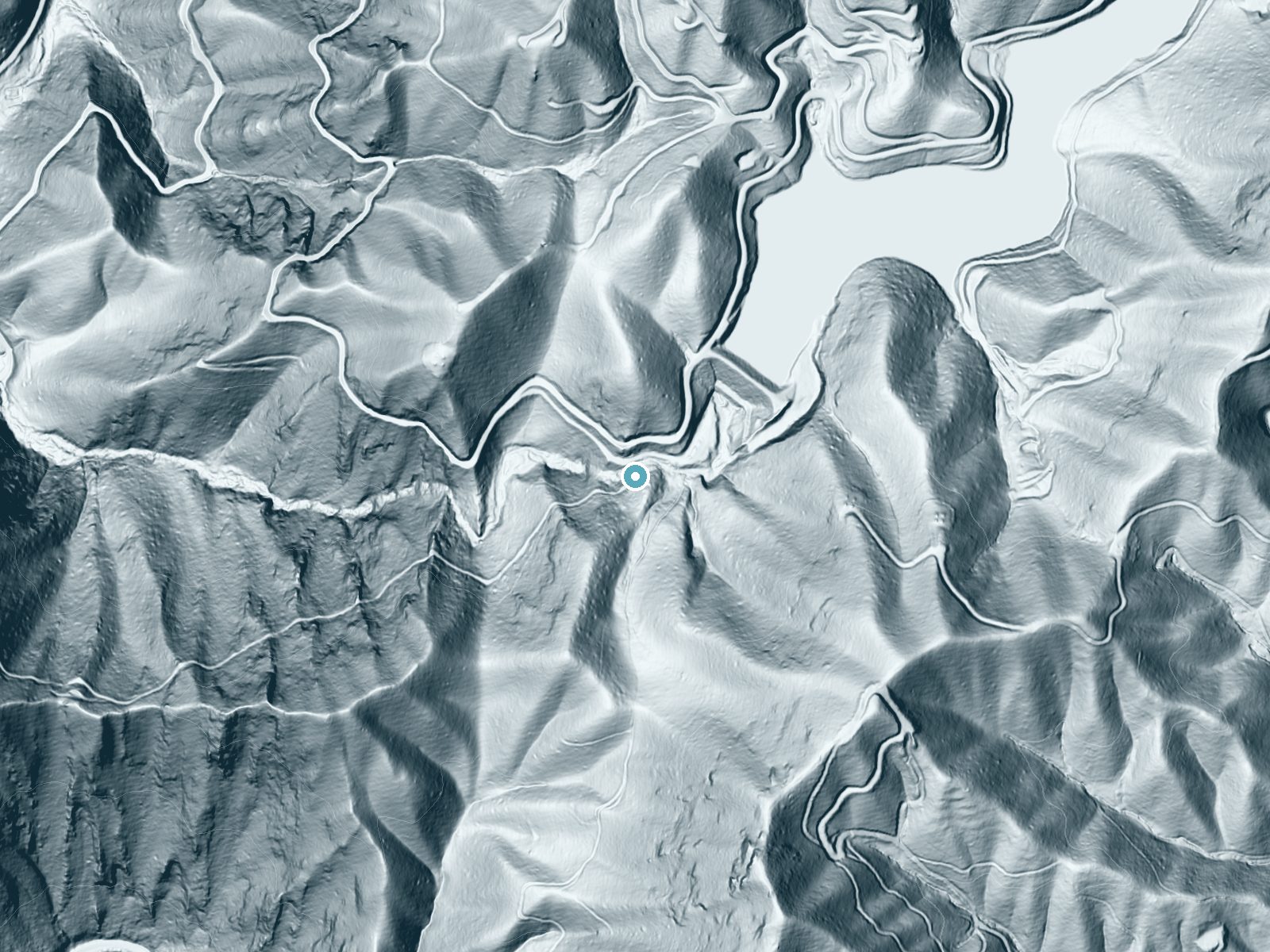
Drag to compare. The dot marks the waterfall. The frame is about a mile across.
- Ground elevation
- 2,949 feet
- Measured by 1-meter lidar
- Drop at the falls
- About 192 feet
- Change in ground height within ~250 feet of the falls
- Faces
- West
- Glows in afternoon and evening light.
A slice through the lidar ground surface, from above the falls to downstream (heading west).
Elevation data: USGS 3D Elevation Program. Aerial imagery: USGS The National Map. Public domain.
Location & Access
Getting There
Queens Falls is located within the Pisgah National Forest. Access typically involves driving to a nearby trailhead and hiking to the falls. Specific directions to the trailhead may vary, so it is recommended to consult a reliable map or GPS for guidance.
Get Directions on Google MapsParking
Parking is available at the trailhead, but spaces may be limited, especially during peak seasons. Arrive early to secure a spot.
Elevation
2,959 feet above sea level
Coordinates
35.274621° N, -83.658240° W
Visitor Tips & Gear
Wear sturdy hiking shoes, as the trail can be uneven or muddy. Bring water and snacks, and consider bug spray during warmer months. Arrive early to avoid crowds and secure parking.
As an Amazon Associate, we earn from qualifying purchases.
With 2.5 miles and 300 ft of elevation gain, sturdy boots and trekking poles will help on this moderate trail. Sun exposure on the trail makes good sun protection a must in summer.

Polarized Sunglasses (Knockaround)
Cuts glare off the water so you actually see the falls — and your photos turn out better too.

Columbia Watertight II Rain Jacket
Packs into its own pocket, seam-sealed, and keeps you dry from spray and surprise rain.

Earth Pak Waterproof Dry Bag
Keeps your phone and gear dry when waterfall mist soaks everything else.
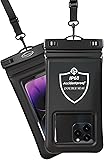
Waterproof Phone Pouch (AiRunTech)
Cheap insurance — take photos right next to the falls without killing your phone.

Timberland Euro Sprint Mid Waterproof
Trusted waterproof boot with premium leather and grippy rubber sole — reliable on rocky, wet trails.

TrailBuddy Trekking Poles
Lightweight aluminum, cork grips, and flip-locks that actually hold — a best-seller for good reason.
Where to Stay
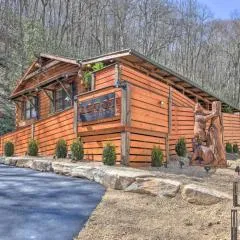
The Lodge Nantahala River
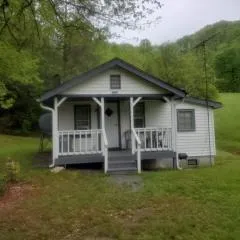
Cute Little Cabin (Near the Nantahala River)

Quality Inn & Suites Robbinsville

Phillips Historic Motel & Cottages
Browse vacation cabins and private rentals nearby
Unique outdoor stays — tents, yurts, and treehouses
Rent a campervan or RV for your waterfall road trip
Some links are affiliate links. We may earn a commission at no extra cost to you.
Nearby Campground
CHEOAH POINT CAMPGROUND
13.7 miles away · 23 sites
Overview Cheoah Point Campground lies on a peninsula of the vast Lake Santeetlah in the hills of western North Carolina. The lake and surrounding landscape provide countless recreational opportunities for outdoor enthusiasts. Recreation Anglers enjoy fishing for trout, walleye, a variety of bass, bream and crappie and more in the 2,800-acre Lake Santeetlah. Boating, canoeing, jet skiing and swimming are also popular activities on the lake. Nearby, the Wauchecha Bald Trail, which begins as a an ea
Book on Recreation.govNearby Hot Springs
Hot springs near Andrews, North Carolina
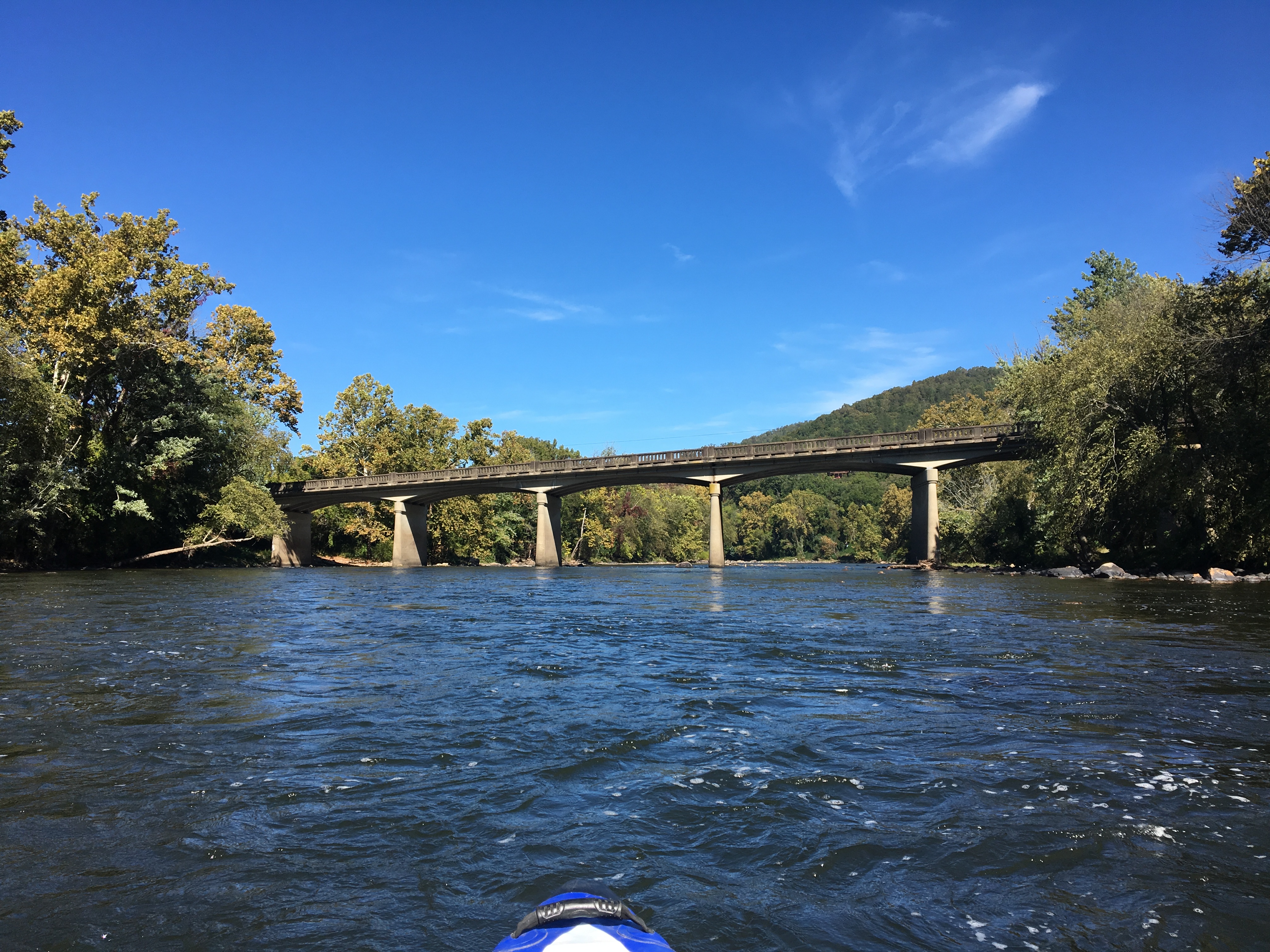
Looking for a soak after your hike? Explore more hot springs near Andrews, North Carolina on SoakingSprings.
Explore North Carolina springsAdditional Information
Nearby Attractions
Other waterfalls and hiking trails in the Pisgah National Forest, such as Looking Glass Falls and Sliding Rock.
Wildlife
The area is home to a variety of wildlife, including birds, deer, and small mammals. Be cautious of snakes and other potentially hazardous animals.
Cities near Queens Falls
Nearby Waterfalls

Writing about Queens Falls? Embed this waterfall on your site for free.