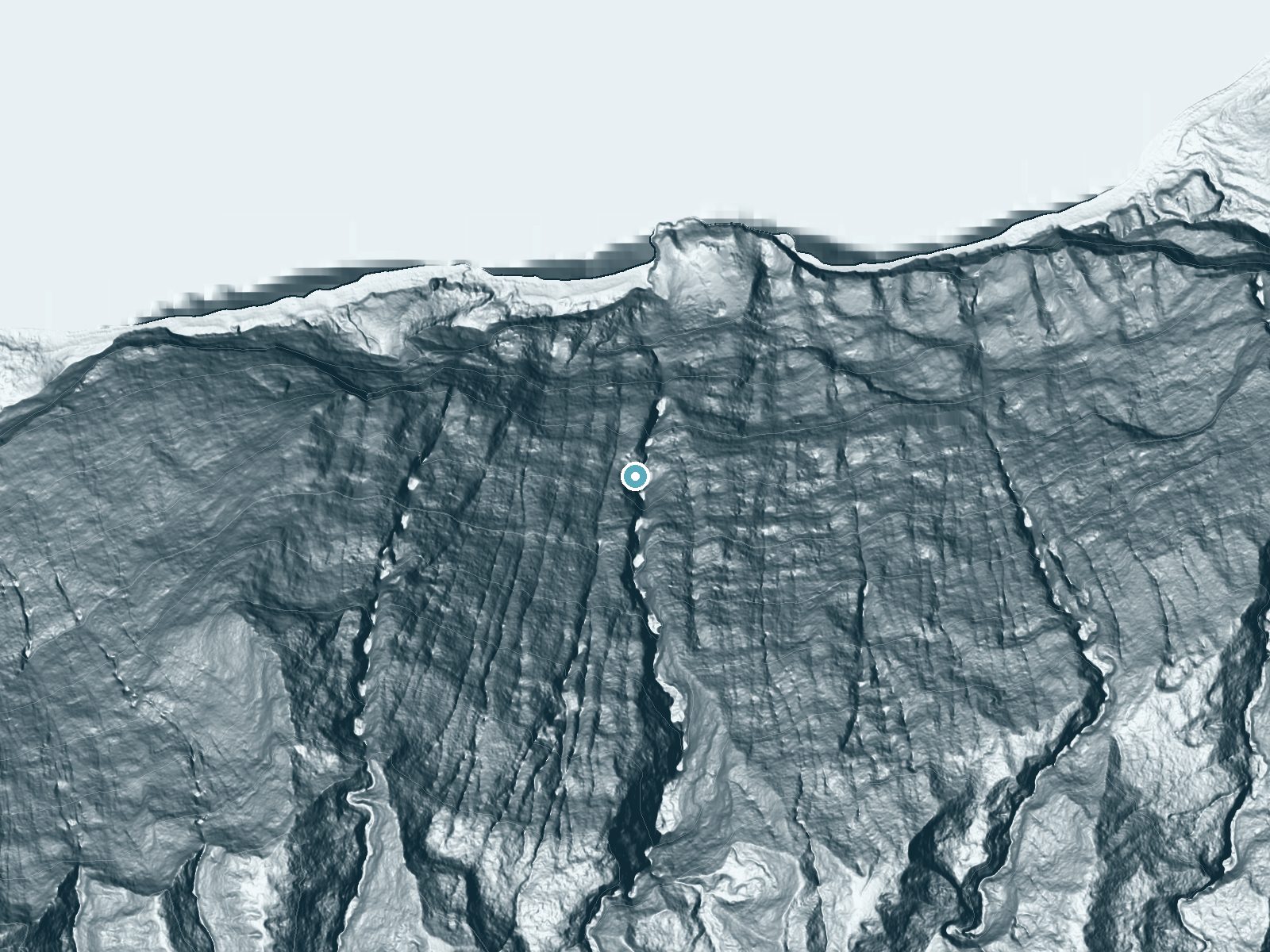
 LiDAR terrain view · USGS 3DEP
ʻOloʻupena Falls
Hawaii • 900 ft
By Armen Suny · Last verified Oct 2026
LiDAR & 3D terrainAbout ʻOloʻupena Falls
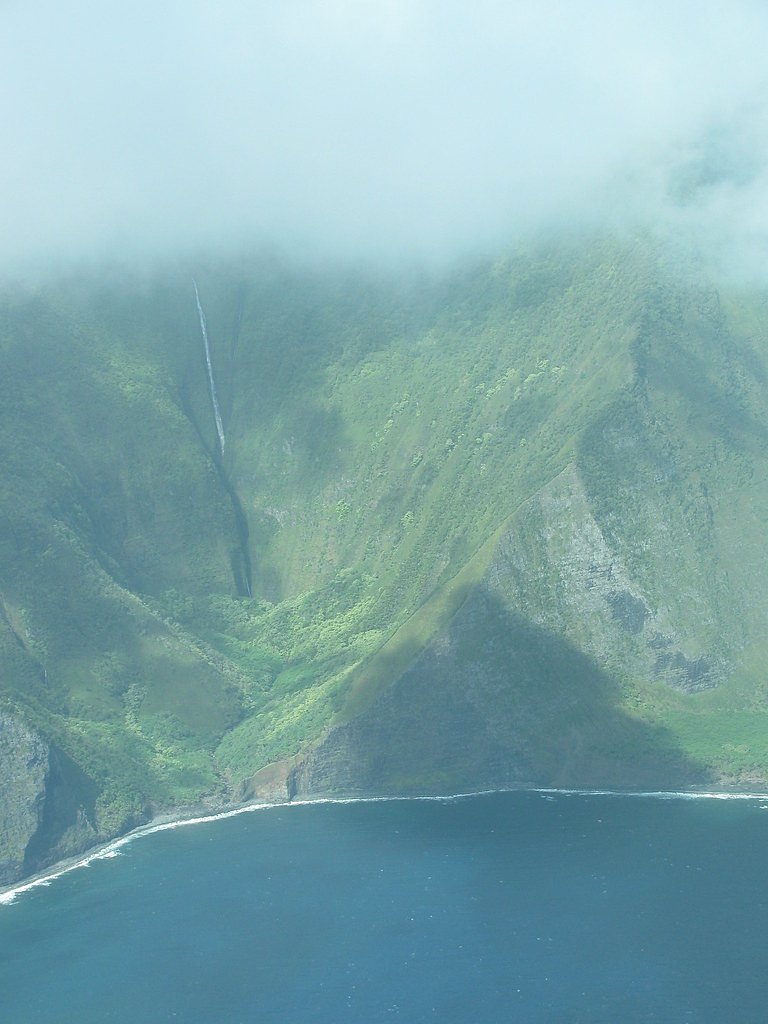
Oloʻupena Falls plunges from the northeastern cliffs of Molokaʻi, dropping about 2,953 feet (900 m) and making it unofficially one of the tallest waterfalls in the world and the highest in the United States. The falls form where a short, seasonal stream spills over one of the planet’s tallest sea-side cliffs, carving a deep groove in the rock between the Pelekunu and Wailau valleys. The cascade’s dramatic height and remote coastal setting create a showpiece best appreciated from the water or the air, where the full tiered drop can be seen against the island’s rugged shoreline. The falls lie within the Oloku‘i Natural Area Reserve, owned and managed by the State Department of Land and Natural Resources (SDNR) and designated SCA. Because the area is coastal, steep, and protected, there is no developed or maintained public approach to the base—viewing is typically done from boats or aircraft. Visitors should respect the reserve’s managed status and plan any sea- or air-based trips with licensed operators who are familiar with local regulations and conditions.
The Setting
ʻOloʻupena Falls sits at 1,289 feet within Oloku'i Natural Area Reserve, in the foothills of Hawaii. At 900 feet, it is among the taller waterfalls in Hawaii.
Height: 900 feet
Nearby Falls Worth Visiting
Puʻukaʻōkū Falls, the tallest waterfall in Hawaii at 2,756 feet, lies 0.3 miles to the east. Also nearby: Kahiwa Falls (1749 ft, 3.2 mi) and Pāpalaua Falls (1200 ft, 3.3 mi).
Trail & Hike Details
Trail Description
There is no maintained trail to Oloʻupena Falls; the falls descend sheer sea cliffs and are not accessible by a conventional hiking path. They can only be reliably viewed from the ocean or from the air. In short: no formal surface, no signed grade/class data, and any land-based approach would be off-trail, steep, and potentially hazardous—plan to view by boat or air and follow local management guidance from SDNR.
What to Expect
The falls plunge a dramatic 900 feet.
Accessibility
ʻOloʻupena Falls is not wheelchair accessible due to its remote location and the need for helicopter or boat access.
Frequently Asked Questions
🐶 Are Dogs Allowed at ʻOloʻupena Falls?
❌ Dogs are not allowed
Are There Any Fees or Permits Required?
🤑 Fee: $0.00
🏊 Is There Swimming at ʻOloʻupena Falls?
❌ Swimming is not allowed
When to Visit
The falls can be visited year-round, but weather conditions are typically more favorable during the dry season (April to October).
Seasonal Access
The best time to visit is Spring, Summer, Fall, and Winter. Heavy rains during wet season (November through March) bring higher flow but can make trails slippery.
Safety Information
Weather conditions can change rapidly, especially during the rainy season. Helicopter and boat tours may be canceled or delayed due to safety concerns. Always follow the instructions of your tour operator.
Current Water Conditions
These readings come from the USGS gauge on East Fork Kawela Gulch, 4.6 miles away, not on ʻOloʻupena Falls's own stream. Use them as a sign of whether the area is running wet or dry.
2 ft³/s
Current discharge — how much water is flowing
Higher than usual for this time of year
Based on 29 years of record
2.95 ft
Water depth at gauge
7-Day Discharge Trend
What does this mean for your visit?
The water is flowing higher than usual for this time of year.
About This Gauge
7-Day Flow Outlook
Based on the USGS gauge EF Kawela Gulch nr Kamalo, Molokai, HI (7 km away).
Today
Roaring
2 cfs
6/10Tomorrow
Roaring
2 cfs
6/10Tue
Roaring
4 cfs
6/10Wed
Roaring
7 cfs
6/10Thu
Roaring
4 cfs
6/10Fri
Roaring
2 cfs
6/10Sat
Roaring
1 cfs
6/10Best window: Today — roaring flow, scattered rain showers (trip score 6/10).
Best time of year: this gauge typically runs highest from late November to late December, peaking in December.
How we calculate this
This is a transparent outlook, not a precise forecast. We take the waterfall's current flow strength (how it ranks against its historical normal for today, from the nearest USGS stream gauge), carry that ranking forward along the gauge's seasonal curve, and nudge it for forecast rain. Confidence is highest for the next day or two and falls further out. Always check official conditions and your own judgment before visiting — high flows can be dangerous.
Know when to go.
Get a free email alert when waterfalls near Ualapue hit peak flow. We only send when conditions are worth the trip — no weekly newsletters, no spam.
Weather Forecast
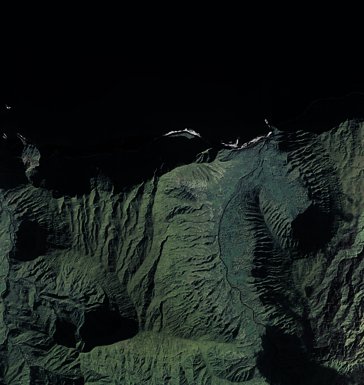
The Terrain, Seen by LiDAR
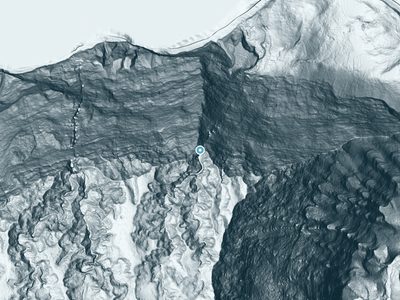
Aircraft-mounted lasers measured this ground to within inches. Trees and buildings are digitally stripped away, leaving the bare shape of the land the water has carved.
Along the line through the falls, the bare ground drops about 758 feet, most of it in one sheer step, the signature of a plunge waterfall. The listed height of 900 feet matches what the lidar sees. The ground at the falls is roughly 1,112 feet above sea level.
The whole reach is steep: about 759 feet of descent in the 500 feet above the falls and another 674 feet in the 500 feet below. The falls face north and stay mostly shaded, with soft, even light all day.
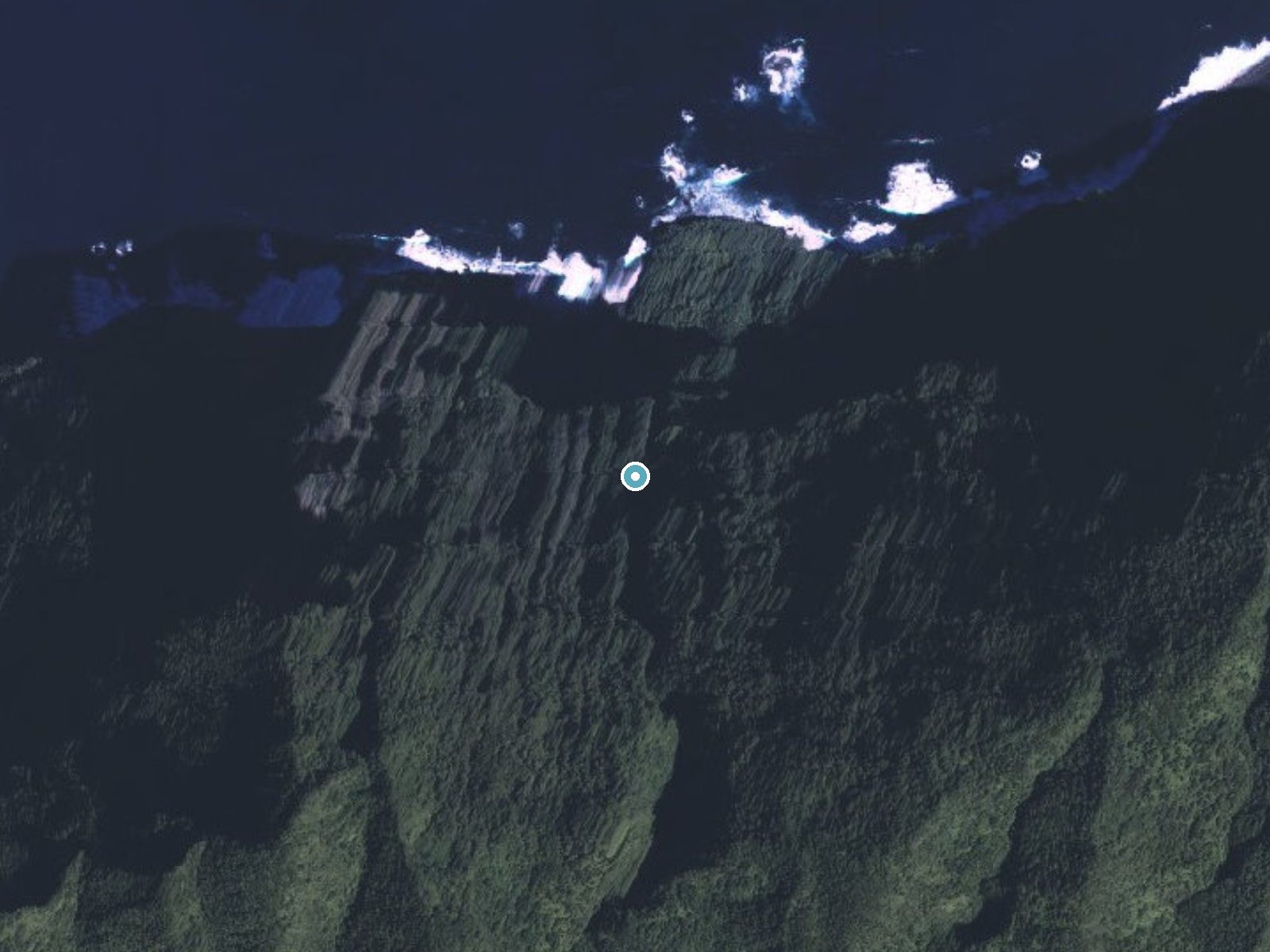
Drag to compare. The dot marks the waterfall. The frame is about a mile across.
- Ground elevation
- 1,112 feet
- Measured by 1-meter lidar
- Drop at the falls
- About 758 feet
- Change in ground height within ~250 feet of the falls
- Faces
- North
- Mostly shaded, so the light stays soft and even all day.
A slice through the lidar ground surface, from above the falls to downstream (heading north).
Elevation data: USGS 3D Elevation Program. Aerial imagery: USGS The National Map. Public domain.
Location & Access
Getting There
ʻOloʻupena Falls is located on the northeastern coast of Molokai, Hawaii. It is not accessible by road or hiking trails. Visitors typically view the falls via helicopter tours or boat excursions.
Get Directions on Google MapsParking
There is no parking available as the falls are not accessible by land.
Elevation
1,289 feet above sea level
Coordinates
21.160655° N, -156.856410° W
Land Management
Managed by SDNR
Visitor Tips & Gear
Book a helicopter or boat tour in advance to ensure availability. Morning tours may offer better visibility due to calmer weather conditions. Bring a camera to capture the stunning views.
Where to Stay

High-End Resort Condo Nestled on Molokai Shoreline

OUTRIGGER Kāʻanapali Beach Resort
Kahana Beach Vacation Club

Royal Lahaina Resort & Bungalows
Browse vacation cabins and private rentals nearby
Unique outdoor stays — tents, yurts, and treehouses
Rent a campervan or RV for your waterfall road trip
Some links are affiliate links. We may earn a commission at no extra cost to you.
Additional Information
Nearby Attractions
Other notable attractions on Molokai include Halawa Valley, Kalaupapa National Historical Park, and Papohaku Beach.
Wildlife
The area around the falls is home to native Hawaiian birds and marine life, which may be visible during boat tours.
Nearby Waterfalls
 LiDAR
LiDAR
 LiDAR
LiDAR
Writing about ʻOloʻupena Falls? Embed this waterfall on your site for free.