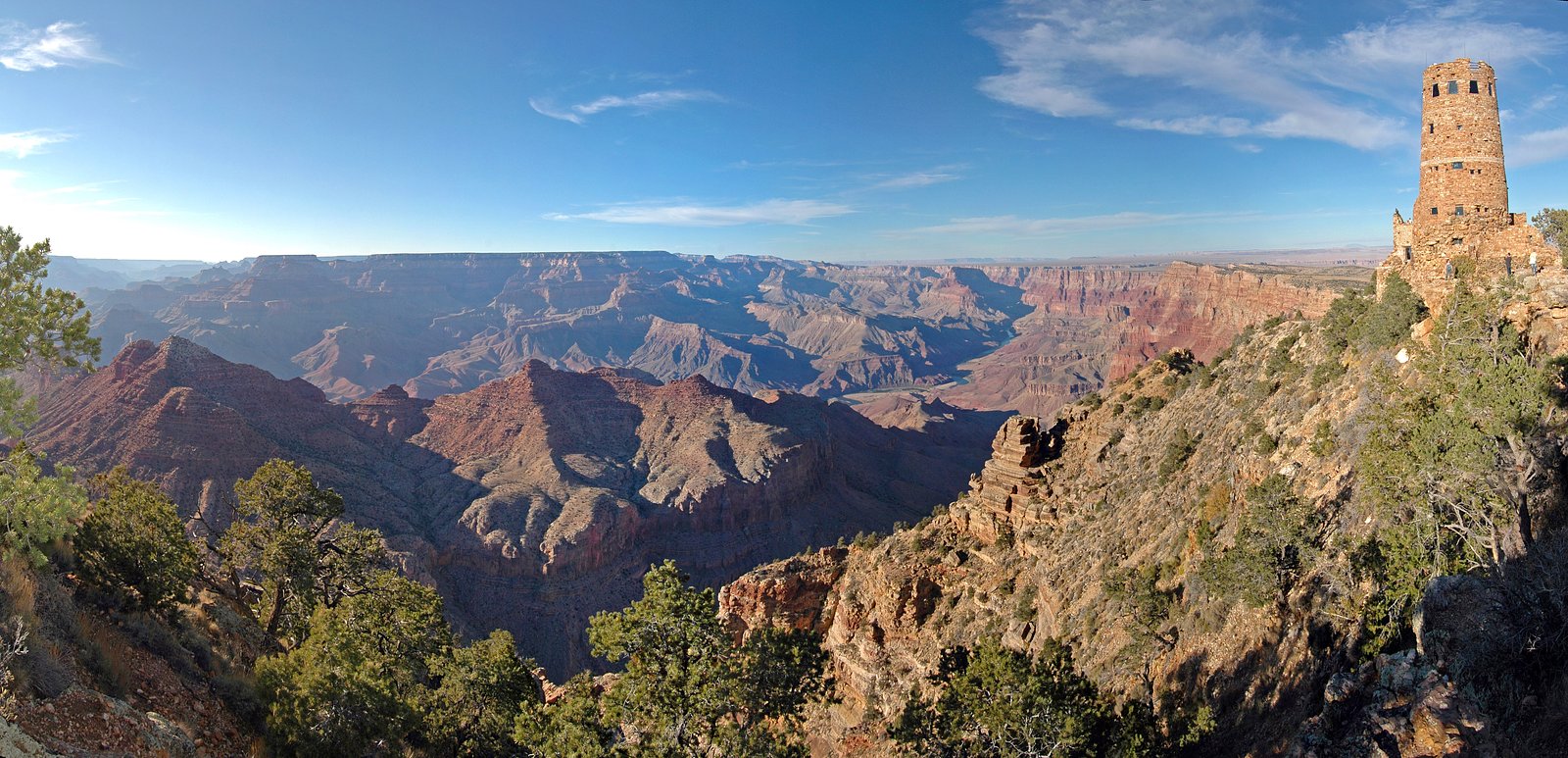
Columbine Falls
Arizona • Grand Canyon National Park
By Armen Suny · Last verified Oct 2026
LiDAR & 3D terrainBefore you go
Columbine Falls has no road or trail access. It is reached only by boat on the Colorado River in the lower Grand Canyon, usually on permitted river trips that continue below Diamond Creek.
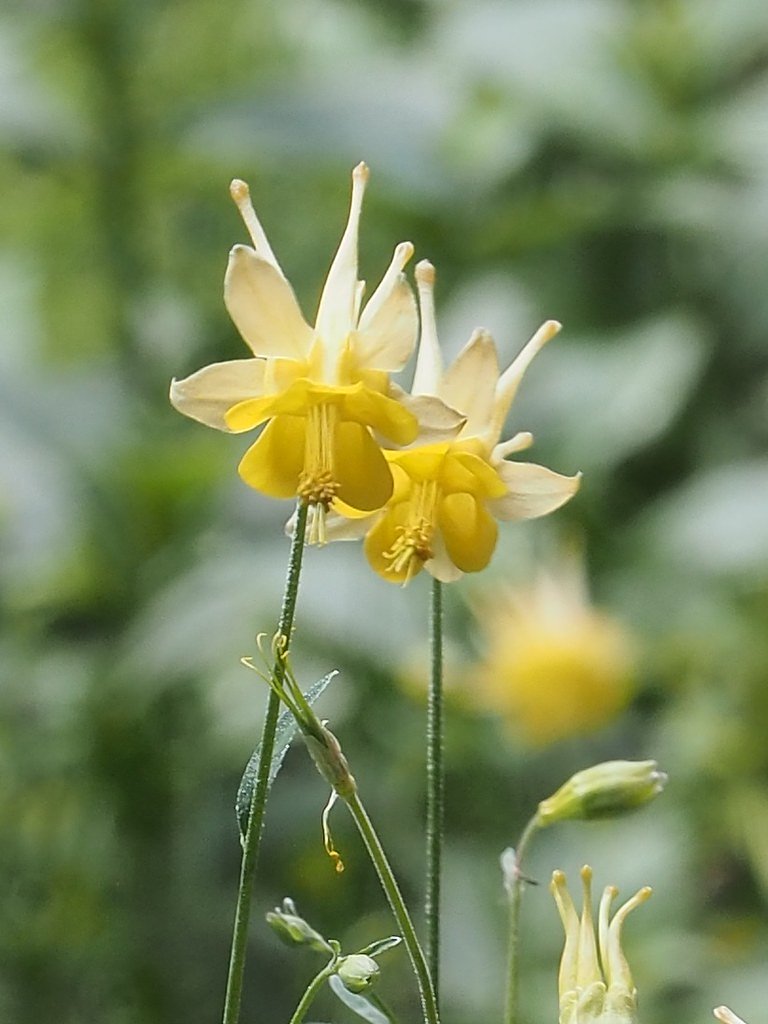
Photo Credits (5)
About Columbine Falls
Columbine Falls drops into a side canyon of the Colorado River at the far western end of Grand Canyon National Park, a few miles upstream of Pearce Ferry and the Grand Wash Cliffs. No road or trail from the rim reaches it; visitors arrive by boat, usually on river trips that continue below Diamond Creek, and walk a short path up from the landing. When Lake Mead stood higher, silt and lake sediment filled the lower side canyon, and the falls are now roughly half their former height.
The Setting
Columbine Falls sits at 1,207 feet within Grand Canyon National Park, in the foothills of Arizona.
Trail & Hike Details
Trail Description
There is no rim trail. A short footpath climbs from the river landing up the drainage to the falls; a new path was built up the drainage after a large flash flood in September 2014. We have no reliable length or elevation figures.
What to Expect
A small waterfall in a side canyon a short walk from the Colorado River. Flash floods have reshaped the drainage before, so the path and landing can change from year to year.
Accessibility
The trail to Columbine Falls is not wheelchair accessible due to uneven and rocky terrain.
Frequently Asked Questions
🐶 Are Dogs Allowed at Columbine Falls?
❌ Dogs are not allowed
Columbine Falls is below the canyon rim, and pets are never allowed below the rim of Grand Canyon.
Are There Any Fees or Permits Required?
🤑 Fee: $5.00
🏊 Is There Swimming at Columbine Falls?
❌ Swimming is not allowed
When to Visit
The best time to visit Columbine Falls is during the spring or early summer when the waterfall is most likely to be flowing. Fall can also be a pleasant time to hike, but the falls may be dry.
Seasonal Access
The best time to visit is Spring, Summer, and Fall. Winter access may be limited. Watch for flash flood warnings during monsoon season (July through September). Check with Grand Canyon National Park for current conditions.
Safety Information
Hikers should be prepared for changing weather conditions and carry sufficient water. Watch for loose rocks and slippery surfaces near the falls. Avoid hiking during extreme heat or after heavy rainfall, as flash flooding may occur.
Current Water Conditions
These readings come from the USGS gauge on Spencer Creek, 25.1 miles away, not on Columbine Falls's own stream. Use them as a sign of whether the area is running wet or dry.
3.39 ft
Water depth at gauge
About This Gauge
This gauge is on a regional waterway. Conditions at the falls may differ, especially after local rain.
7-Day Flow Outlook
Based on the USGS gauge SPENCER CREEK NEAR PEACH SPRINGS, AZ (40 km away).
Today
Barely Flowing
1 cfs
5/10Tomorrow
Barely Flowing
1 cfs
5/10Thu
Barely Flowing
1 cfs
5/10Fri
Barely Flowing
1 cfs
5/10Sat
Low
1 cfs
3/10Sun
Barely Flowing
1 cfs
5/10Mon
Barely Flowing
1 cfs
3/10Best window: Today — barely flowing flow, mostly sunny (trip score 5/10).
Best time of year: this gauge typically runs highest from late March to late April, peaking in August.
How we calculate this
This is a transparent outlook, not a precise forecast. We take the waterfall's current flow strength (how it ranks against its historical normal for today, from the nearest USGS stream gauge), carry that ranking forward along the gauge's seasonal curve, and nudge it for forecast rain. Confidence is highest for the next day or two and falls further out. Always check official conditions and your own judgment before visiting — high flows can be dangerous.
Know when to go.
Get a free email alert when waterfalls near Meadview hit peak flow. We only send when conditions are worth the trip — no weekly newsletters, no spam.
Is Columbine Falls Frozen?
Updated about 8 hours agoNot frozen highs above freezing lately north-facing, shaded
Columbine Falls is not frozen right now; highs have been above freezing. Yesterday ran 75°F to 50°F.
- Days below freezing
- 0 of the last 14
- Current cold streak
- 0 days
- Freezing days ahead
- 0 of the next 7
- Flow
- 1 ft³/s
Winter safety. Frozen falls are the one waterfall trip with a documented injury pattern: falling ice, and ice-glazed rock and trail. Wear microspikes, keep well back from the base and from overhangs, and never walk out on ice over moving water.
Estimate from Open-Meteo daily temperatures at the falls, the LiDAR-measured facing direction, and the nearest stream gauge. It is a likelihood, not a report from the trail.
Weather Forecast
The Terrain, Seen by LiDAR
Aircraft-mounted lasers measured this ground to within inches. Trees and buildings are digitally stripped away, leaving the bare shape of the land the water has carved.
1-meter lidar measures about 311 feet of descent through Columbine Falls, a steep tiered drop rather than a single free fall. The brink sits at about 1,217 feet above sea level.
The ground changes about 138 feet in the 500 feet above the falls and 23 feet in the 500 feet below. Facing north, the falls stay mostly shaded, with soft, even light all day.
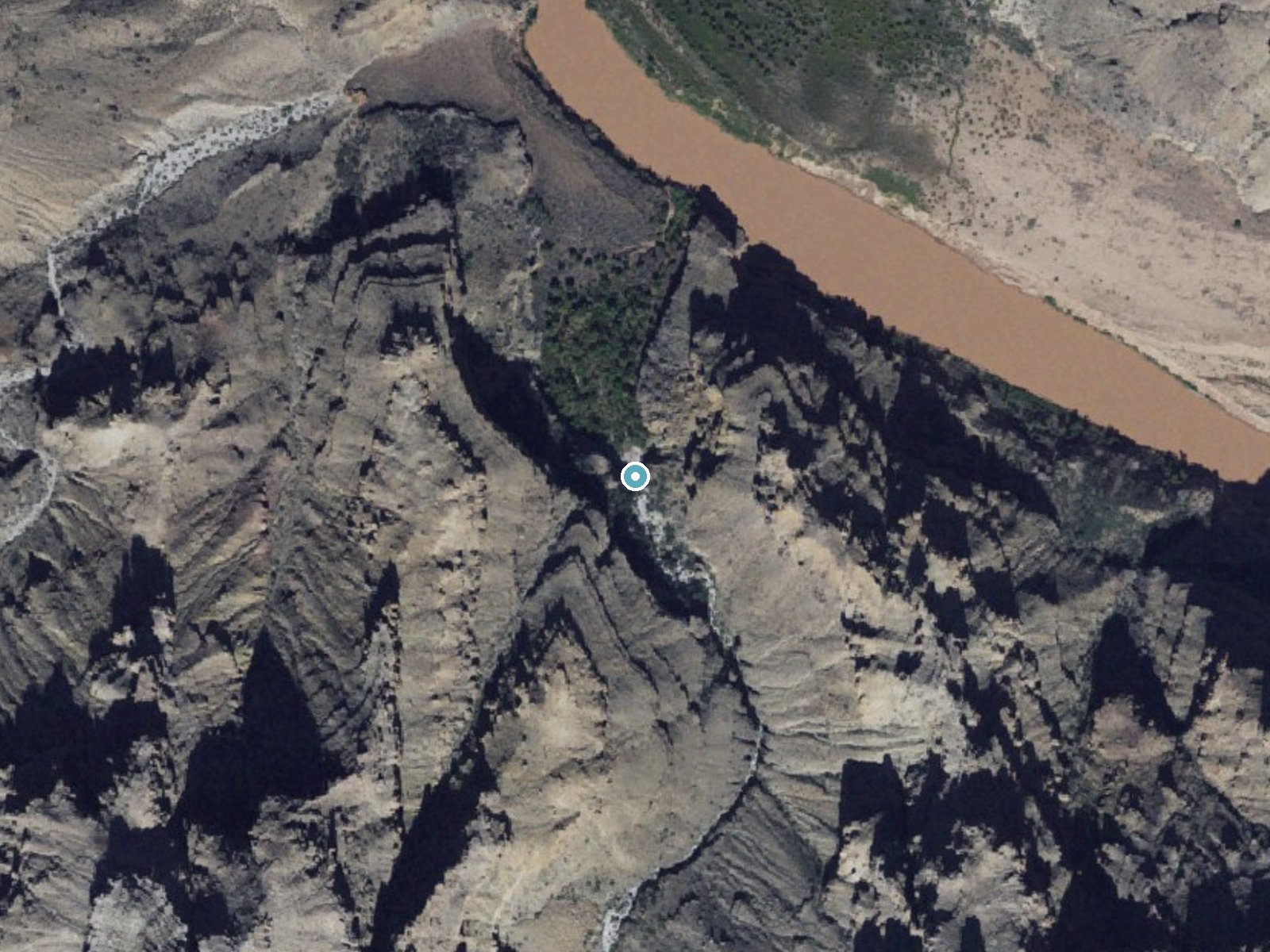
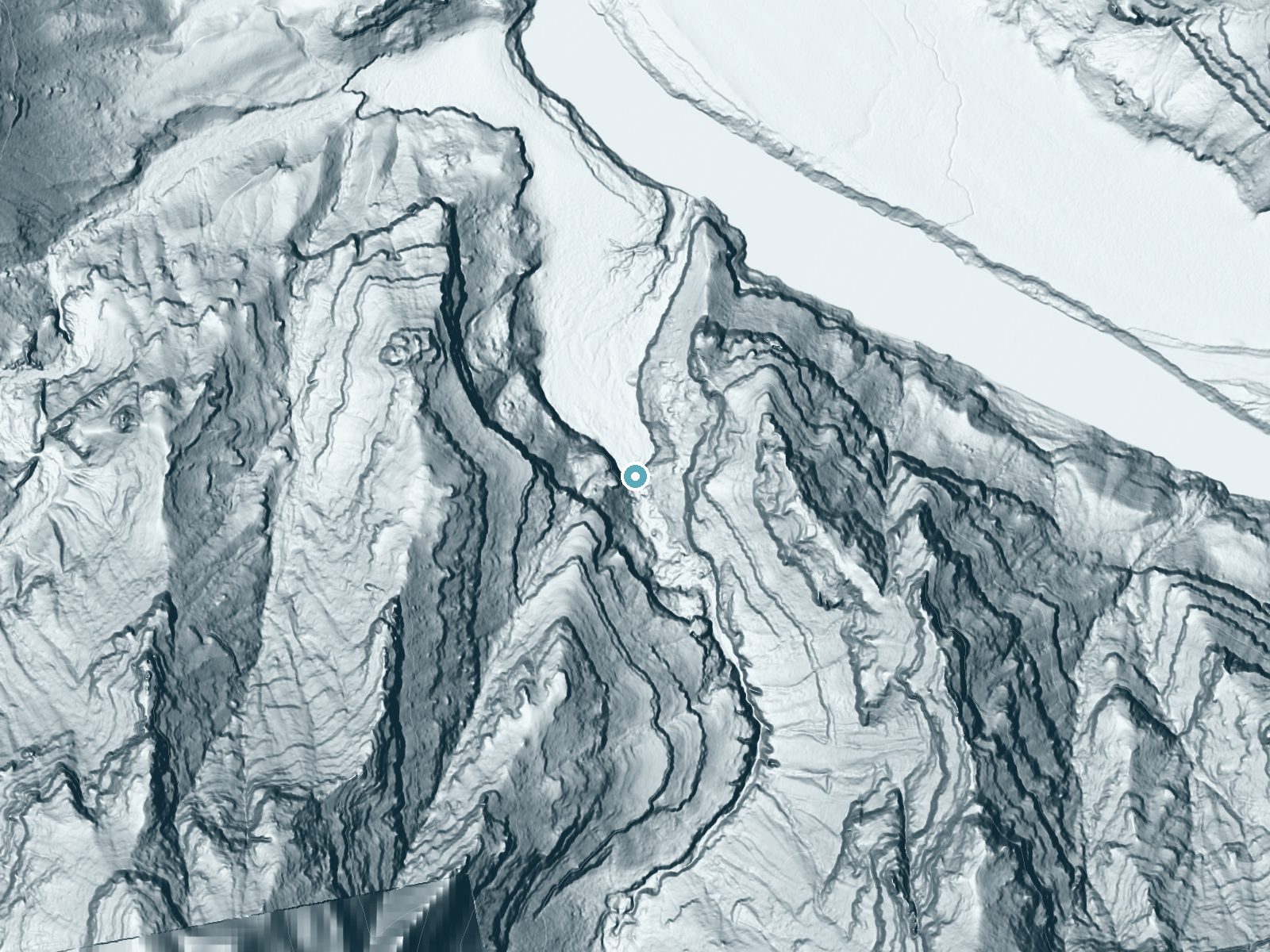
Drag to compare. The dot marks the waterfall. The frame is about a mile across.
- Ground elevation
- 1,217 feet
- Measured by 1-meter lidar
- Drop at the falls
- About 311 feet
- Change in ground height within ~250 feet of the falls
- Faces
- North
- Mostly shaded, so the light stays soft and even all day.
A slice through the lidar ground surface, from above the falls to downstream (heading north).
Elevation data: USGS 3D Elevation Program. Aerial imagery: USGS The National Map. Public domain.
Location & Access
Getting There
Columbine Falls is reached only from the Colorado River in the lower Grand Canyon, between Diamond Creek (river mile 226) and the Pearce Ferry takeout (about river mile 280). Most visitors stop on multi-day river trips that run below Diamond Creek. Pearce Ferry, the nearest road access, is at the end of Pearce Ferry Road about 52 miles from US 93 between Hoover Dam and Kingman.
Get Directions on Google MapsElevation
1,207 feet above sea level
Coordinates
36.092673° N, -113.921809° W
Land Management
Managed by NPS Restricted Access
Visitor Tips & Gear
Wear sturdy hiking shoes, bring plenty of water, and check weather conditions before heading out. Cell service may be limited in the area, so plan accordingly.
Where to Stay

Cabins at Grand Canyon West

Grand Canyon Western Ranch

Modern Cabin with Arcade, Foosball Table and Fire Pit in Meadview, Arizona

Rare four Bedroom MeadviewVacation Home - Grand Canyon West-Skywalk
Browse vacation cabins and private rentals nearby
Unique outdoor stays — tents, yurts, and treehouses
Rent a campervan or RV for your waterfall road trip
Some links are affiliate links. We may earn a commission at no extra cost to you.
Nearby Hot Springs
Hot springs near Mesquite, Arizona
Pakoon Springs
Pakoon Springs flows at 86°F in the remote Arizona Strip country, emerging 18 degrees above the 68°F average at 2,300 feet elev...
Pumpkin Spring
Pumpkin Spring emerges as a mineralized thermal feature in the Grand Canyon's depths, located on the Hualapai Indian Reservatio...

Rogers Spring
Rogers Spring flows at 82°F from a fault-controlled discharge point within Lake Mead National Recreation Area, just 6.9 meters ...
Blue Point Spring
Blue Point Spring emerges at 82°F inside Lake Mead National Recreation Area in Clark County, one of the lowest-elevation therma...
Springs
Within Lake Mead National Recreation Area, these 77°F springs emerge just 5 degrees above ambient air temperature in the Mojave...

Spring
An unnamed 145-degree spring flows near Boulder City at just 690 feet elevation, likely representing Gold Strike Hot Springs in...
Looking for a soak after your hike? Explore more hot springs near Mesquite, Arizona on SoakingSprings.
Explore Arizona springsAdditional Information
Nearby Attractions
Pearce Ferry, in Lake Mead National Recreation Area, is the nearest road access point and the takeout for lower Grand Canyon river trips.
Cities near Columbine Falls
Other waterfalls named Columbine Falls
1 other waterfall shares this name across the U.S.
Writing about Columbine Falls? Embed this waterfall on your site for free.